
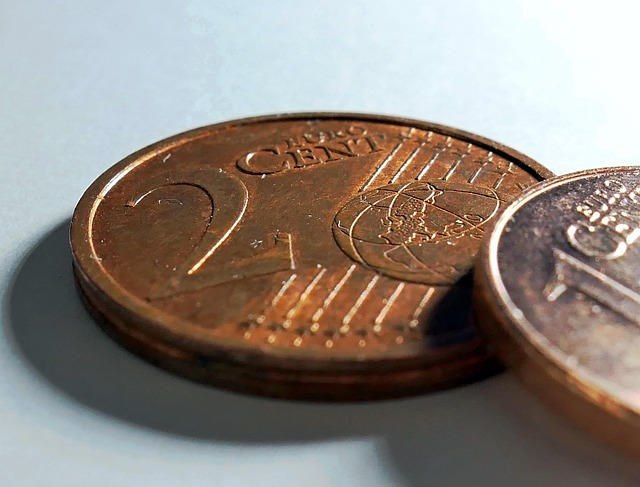
I’m not here to tell you how to live.
I’m here to share my .02 — my take on various topics that matter to me — and maybe give you a different way to think about them.
Who’s behind this place?
I’m a husband and father who’s worked in various roles, including operations, customer experience, project management, and leadership. This is where I share my .02 on different topics. Not every post will land the same way for every reader, and that’s okay — it’s just my .02.
That means a few important things:
- I write from real life, not from an ivory tower.
- I’ve made mistakes, changed my mind, and learned as I go.
- I expect you’ll agree with some things, question others, and ignore a few completely.
And I’m fine with that.
My goal isn’t to build a perfection.
My goal is to help share a different perspective.
Why “The Practical Operator”?
The name The Practical Operator comes from a simple idea:
Most of us are “operators” in some way.
We run households, teams, projects, businesses, ministries, and our own lives.
And most of us don’t need more hype.
We need practical ways to understand what’s happening and make better decisions.
“Practical” matters because:
- Life rarely looks like it does on a slide deck.
- Most theories sound good until you’re tired, stressed, or short on time.
- Fancy language doesn’t help if you can’t use it on a Tuesday afternoon.
So when I call this The Practical Operator, I’m making a promise to you and to myself:
- Keep the thinking clear.
- Keep the language simple.
- Keep the examples close to real life.
What you can expect here
This blog will cover a mix of topics, but they all connect to one theme:
How do we live and work more intentionally, without overcomplicating everything?
You’ll see posts like:
- Work and leadership – how to show up, serve people well, and handle responsibility.
- Money – not as a scoreboard, but as something we steward and use wisely.
- Technology – tools that actually help people instead of just looking impressive.
- Customer experience – how it feels to be on the receiving end of service and systems.
- Project management – turning ideas into reality without losing your mind.
- Faith – how what we believe shows up in daily decisions, not just in theory.
Some posts will be short, like a simple thought or question.
Others will be longer, walking through a topic step by step.
But the tone will stay consistent:
- Straightforward, not stuffy.
- Respectful, not loud or dramatic.
- Professional enough to be taken seriously, human enough to feel real.
My .02, not “the answer”
There’s something important I want to say clearly up front:
- I don’t have all the answers.
- I’m not trying to be a guru.
- I don’t expect everyone to agree with me.
When I talk about work, money, tech, CX, projects, or faith, I’m sharing how I see it, based on my experience and reflection. It’s my .02.
You might read a post and think:
- “That really helps.”
- “I’d tweak that a bit for my situation.”
- “I completely disagree, but it made me think.”
All of those are valid responses.
If a post helps you think more clearly, even when you choose a different path than I would, it has done its job.
Why keep it simple?
The internet is full of complex frameworks, big promises, and strong opinions.
Some of that is useful. A lot of it is noise.
I want this blog to feel like:
- A conversation, not a lecture.
- A calm space, not a constant argument.
- A place where you can pause, reflect, and then go live your life.
Keeping it simple doesn’t mean avoiding serious topics.
It means:
- Using plain language instead of jargon.
- Breaking ideas into small pieces instead of long, tangled explanations.
- Focusing on what you can actually do or consider after you’re done reading.
If you ever listen to someone read these posts out loud, I want it to sound like a thoughtful person talking with you, not reading a technical manual.
Who is this for?
If you:
- Care about how you show up at work and at home.
- Think about money beyond just “more or less.”
- Wonder whether technology is really helping people or just adding noise.
- Have opinions about good and bad customer service.
- Work with projects, teams, or responsibilities.
- Try to live your faith in everyday decisions, not just in special moments.
…then you’re exactly the kind of reader I have in mind.
You don’t have to be a “business person.”
You don’t have to know the latest buzzwords.
You don’t have to be at a certain level in your career or life.
You just have to be someone who wants to think, not just react.
What I’m asking from you
I only have a few simple requests:
- Read with curiosity.
Take what’s useful. Leave what’s not. - Be okay with my .02.
You don’t have to agree with every post; just use it as a lens to think through your own situation. - Apply at least one thing.
If a post gives you one question, one idea, or one shift in perspective that helps, that’s a win.
If you ever feel strongly about something you read here — positive or negative — that’s also okay. Strong reactions often mean we’ve touched something that matters.
Where we’re going next
In the next few posts, I’ll start with topics that show up often in everyday life:
- Why truly good customer service stands out so much.
- Why simple technology can be more powerful than flashy tools.
- What project management has taught me about priorities and patience.
- How we can think about money with a little more calm and a little less noise.
Over time, I’ll also explore how faith connects to all of this — not just as a separate topic, but as a lens that shapes how we see work, money, and life.
If any of that sounds interesting, I’d invite you to stick around, subscribe, and see where this goes.
A simple closing thought
I’ll end this first post with a simple idea:
You don’t have to have everything figured out to start thinking more clearly.
You just have to care enough to pause, look at what’s in front of you, and ask better questions.
That’s what The Practical Operator is about.
This is my .02.
Hope it helps you find your own .02.